

The science is strong. The story isn't.
The commercial case needs to exist before investors or a TTO will act. Hatch builds it with engineering and commercial rigour working together.
Most research commercialisation support focuses on either the science or the business case. Hatch does both together from day one, because the commercial decisions and the engineering decisions are the same decisions, and separating them is where most technologies stall. Working with researchers and principal investigators from the earliest commercial conversations through to market validation, funding bids, licensing and spinout formation.
The first decision is whether a commercial pathway exists and which one makes sense. Licensing, industry partnership, spinout or something else entirely. Hatch maps the applications, validates the market and connects the right industry partners to the technology, with engineering and commercial judgement applied together so the assessment is grounded in what the technology can actually deliver.
Before committing time or resource the first question is whether a commercial pathway exists and which one makes sense. Hatch assesses the technology against real market demand with engineering and commercial thinking in the same room, so the route forward is based on what the technology can actually deliver, not what looks good on paper.
The commercial case needs to exist before investors or a TTO will act. Hatch builds it with engineering and commercial rigour working together.
The technology has potential but the strategy, business model and roadmap do not yet exist. Hatch builds all three together from the start.
Chasing every market reaches none of them. Hatch identifies the right entry point using engineering and commercial judgement applied to the same problem.
Clean energy. Advanced materials. Power electronics. Industrial robotics. Thermal energy management. Wastewater treatment. Vertical axis wind. Battery storage. Nuclear robotics. Across every one the challenge has been the same. Turning credible science into a commercial proposition that investors, partners and customers will act on.
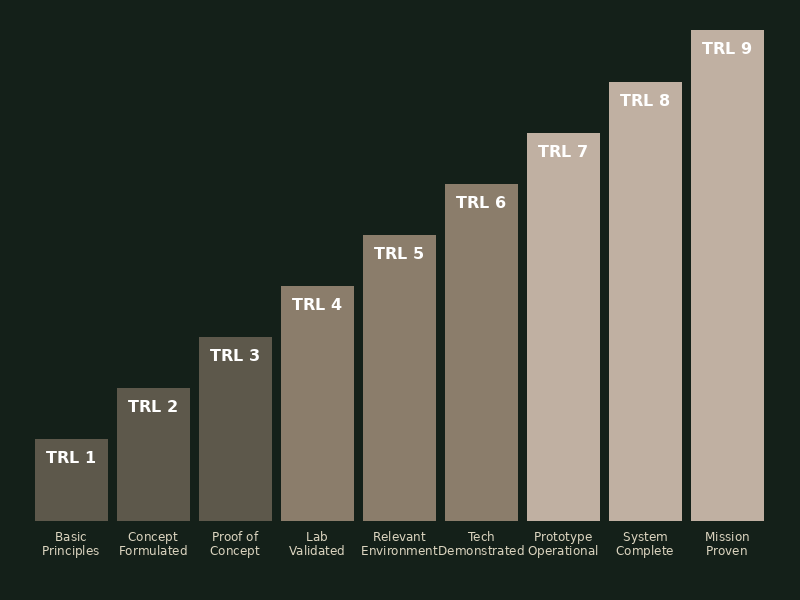
Technology Readiness Levels were invented by NASA in the 1970s to stop spacecraft failing in orbit because nobody had asked the hard engineering questions early enough. Today Innovate UK, Horizon Europe and most major funding bodies use them to assess every application they receive. Most university technologies sit between TRL 3 and TRL 6 for years, technically progressing but commercially standing still. Hatch works across all stages. The earlier the conversation starts the better the outcome.
Related case study
A UK university research group had a novel power-electronics technology for the electricity distribution sector and a national innovation funding bid to write. The funding programme required answers to two questions the team did not yet have evidence to answer. What is the market opportunity? And the route to commercial deployment?
Always. No pitch, no obligation, no clock running. The first conversation is about understanding where the technology is and whether Hatch can genuinely help. If the answer is no, that will be said honestly.
No. The earlier the conversation starts the better. Waiting until TRL 6 or 7 before thinking commercially is one of the most common and costly mistakes in deep tech. Hatch works from TRL 1 onwards.
No. Hatch works within university IP frameworks and alongside TTO processes, not around them. Every engagement is scoped with confidentiality built in from the start.
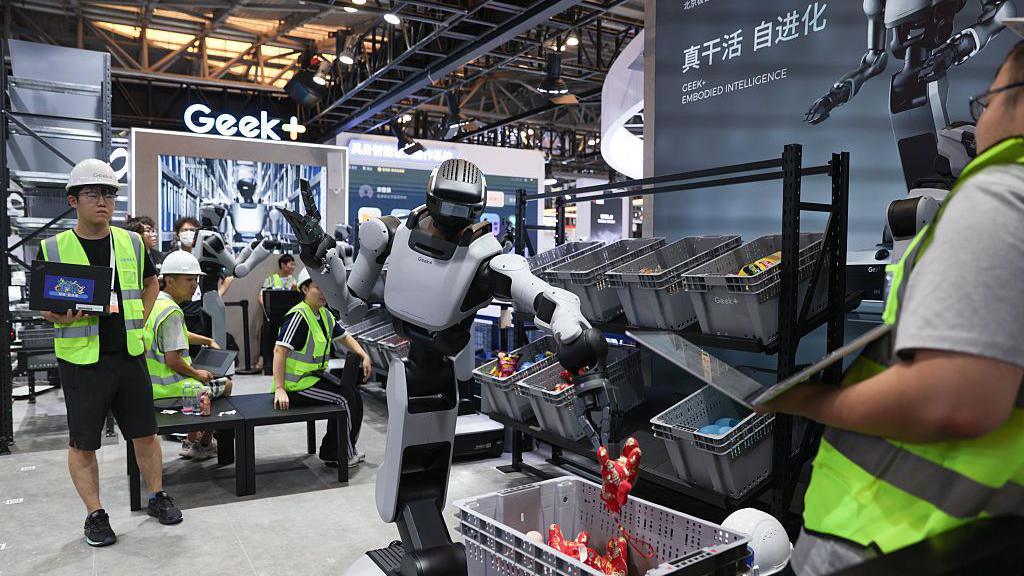
The UK has the lowest robot density in the G7. This year the government funds Robotics Adoption Hubs and a Central Convening Body to fix that. The catch: it only works if we build it as air traffic control, not a help desk. Here is how, and where Hatch fits in.
Innovate UK has changed direction. A strong technical story is no longer enough on its own. The new strategy aims to build high-potential UK businesses, not fund isolated projects. Assessors calibrate applications against a portfolio-level view of what Innovate UK wants the UK economy to look like. The commercial case is no longer supporting evidence. It is the case for funding. A defined beachhead market, sized credibly. A named first buyer and a reason they buy. A clear line from the grant-funded phase to the work that follows. The founders who win start this work long before the form opens.
A TRL 7 demonstration is not an investment thesis. Neither is a patent filing, a peer-reviewed paper, or a proof of concept. These are necessary conditions. They are not sufficient ones. Sophisticated deep tech investors evaluate four things in parallel with the technology: market validation, beachhead clarity, IP coherence, and team completeness. The weakest of the four sets the valuation. Most deep tech ventures leave the commercial questions until the technology is ready. That sequencing is the standard failure pattern. The most expensive version of it is discovered at the investor meeting.
If you are not sure where to start that is exactly what the first conversation is for. No pitch, no pressure just a conversation.