Cobalt has tripled in price since early 2025. The people building battery supply chains in the US and Europe should be paying close attention. Not because of the price move itself, but because of what caused it, and what it reveals about who actually controls this market.
The trigger was an export ban imposed by the Democratic Republic of Congo in February 2025, a response to a price collapse that had driven cobalt to near nine-year lows. The ban choked off feedstock flows and sent prices from roughly $21,000 per tonne to over $56,000 by mid-2026. The ban was lifted in October 2025 and replaced with an annual quota system, but the supply shock had already repriced the market. The deeper story is that a single country, one ranked among the world’s most fragile states, supplies 76% of global cobalt production, and Chinese companies hold ownership stakes in 15 of the largest copper and cobalt mines in the DRC. The West has known this for years. The policy response has been sluggish. Now the bill is arriving.
A Supply Chain Built on a Single Point of Failure
The cobalt market has no analogue in the critical minerals landscape for concentration risk. Not lithium. Not nickel. Not even rare earths, where China dominates processing but production is more geographically distributed. Cobalt’s primary supply is existentially dependent on the DRC, and the DRC’s cobalt sector is in turn existentially dependent on Chinese capital.
The mechanism deserves to be understood precisely. The Sino-Congolais des Mines agreement signed in 2007 gave Chinese firms mining rights to deposits near Kolwezi valued at approximately $93 billion in exchange for infrastructure commitments worth $3 billion. That arrangement seeded the ownership structure that now shapes the entire global cobalt market. China now refines approximately 70% of the world’s cobalt regardless of where the ore originates. The West extracts some of the ore. China processes almost all of it.
Cobalt consumption for battery applications alone is projected to exceed 300,000 metric tonnes annually by 2030, roughly double 2022 levels. The primary supply response, constrained by mine development timelines measured in decades, cannot keep pace. That is the structural problem recycling is now being asked to solve.
How Secondary Cobalt Actually Moves
The recycling value chain is considerably more complex than copper or aluminium scrap, and understanding where the opportunity sits requires understanding how it actually functions.
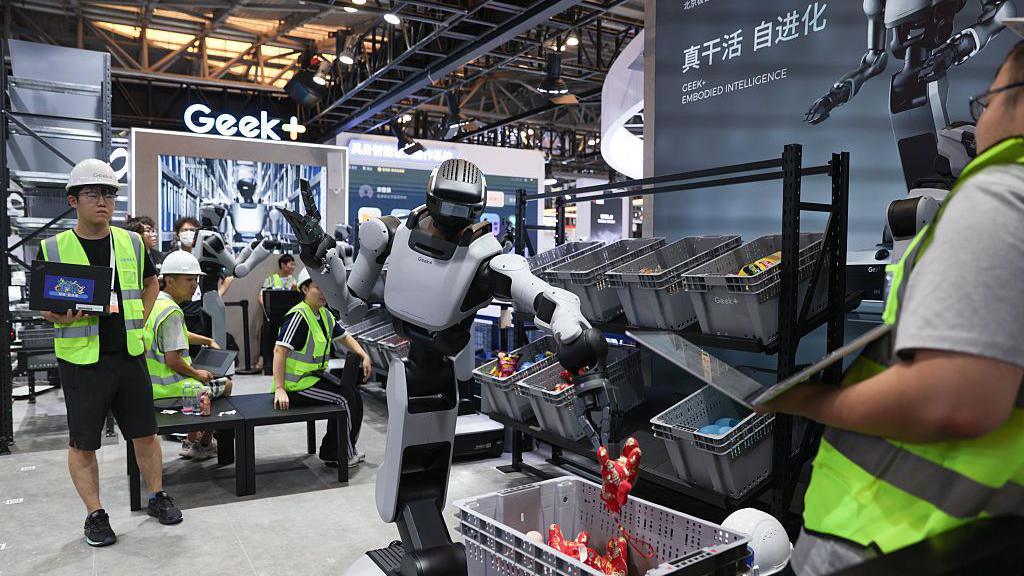
It begins with collection: end-of-life EV battery packs, consumer electronics, manufacturing scrap from cell production, and increasingly, batteries from early EV fleets now reaching end-of-life. Building reliable collection networks is itself an infrastructure problem, and it is the stage where most recycled cobalt is currently lost, not through processing inefficiency but through batteries simply not entering the formal recycling system.
From collection, batteries move to pre-processing: discharge to safe voltage levels, sorting by chemistry, and partial or full dismantling. This stage remains labour-intensive and is often performed manually. Pre-processing cost is a material determinant of whether recycling a given battery type is financially viable.
Pre-processed batteries then undergo mechanical processing, typically shredding or crushing under controlled conditions, to produce black mass: a fine powder containing cobalt, nickel, manganese, lithium, graphite, and residual electrolyte. Black mass is the primary traded intermediate in the battery recycling value chain, and it is where economics and geopolitics intersect uncomfortably. Chinese buyers have historically offered competitive prices for black mass feedstock from European and American recyclers, meaning secondary material often flows east before being refined and returned as cathode precursors.
Refining separates the metals within black mass. Hydrometallurgy is the preferred industrial approach: black mass is leached in dilute sulphuric acid, dissolving the valuable metals into solution, which is then processed through solvent extraction and selective precipitation to isolate cobalt sulphate, nickel sulphate, lithium carbonate, and manganese compounds as separate streams. Hydrometallurgical processes now achieve 95 to 99% recovery rates for cobalt and nickel, and 85 to 95% for lithium.
The Policy Ratchet
The EU Battery Regulation, which entered force in 2023, sets binding targets that become progressively more demanding. By end-2027, recyclers operating in the EU must achieve 90% material recovery for cobalt, copper, lead, and nickel, rising to 95% by end-2031. More consequentially, the regulation mandates minimum recycled content in new batteries: 16% cobalt by 2031, rising to 26% by 2036. These requirements create a compliance-driven floor of demand for verified recycled cobalt that does not currently exist in the market.
In the United States, the Inflation Reduction Act’s Critical Mineral Tax Credits have begun to incentivise domestic battery material production, and cobalt’s position on the US Critical Minerals List means it qualifies for the full suite of associated federal support.
What the Numbers Actually Show
The headline recycling rate for cobalt looks encouraging: approximately 68% of cobalt in batteries is recovered at end-of-life globally. The important caveat is that the first large cohort of end-of-life EV battery packs is only beginning to move through the system in meaningful volumes. The recycling infrastructure being built today will process batteries sold in 2018 to 2022. The batteries being sold now will stress a system that by 2030 will need to handle volumes an order of magnitude larger.
The IEA estimates that under ambitious recycling scenarios, secondary cobalt could meet approximately 30% of demand by 2035. Under current trajectories the figure is closer to 10 to 15%. The gap between those two outcomes is not primarily a question of processing technology. It is a question of collection infrastructure, refining capacity, and supply chain traceability. All three are engineering and logistics problems that yield to capital, policy continuity, and time.
The global black mass recycling market was valued at approximately $16.8 billion in 2025 and is projected to reach $84 billion by 2035. Among the major operators, Umicore held over 15% market share in battery recycling in 2025. Glencore’s August 2025 acquisition of Li-Cycle brought major primary mining capital directly into the recycling value chain. Redwood Materials reported 95%+ critical material recovery rates from its South Carolina facility in late 2025, demonstrating that domestic US hydrometallurgical processing at scale is achievable.
What to Watch
Three dynamics will determine whether the cobalt recycling value chain develops quickly enough to matter for the current energy transition cycle.
First, the pace of collection infrastructure deployment in the US and EU. The first-generation EV fleets are entering end-of-life now. Whether those batteries are captured by domestic recyclers or exported as black mass to Asia will shape secondary supply availability for the next decade.
Second, the investment trajectory in Western hydrometallurgical refining capacity. The gap between current capacity and what the EU Battery Regulation’s 2031 targets imply is substantial, and the facilities that need to be operational by 2031 need to be under construction within the next two to three years.
Third, the stability of DRC primary supply. Cobalt at $56,000 per tonne makes recycling economics more attractive than at $21,000. But the price signal that makes secondary cobalt compelling is itself evidence of a primary supply system under stress. Building the recycled supply chain before that scenario worsens is considerably easier than building it during one.
The battery in the next generation of electric vehicles will, if policy succeeds, contain cobalt that was in a previous battery. The infrastructure to make that happen is being assembled now. The window for Western manufacturers and investors to position themselves inside that value chain rather than outside it is measured in years, not decades.
Why Hatch is writing about this
Deep tech ventures in battery technology, energy storage, and advanced materials are operating inside this supply chain whether they know it or not. The engineering decisions that determine what a product is made of, and the commercial decisions that determine where it is sold and to whom, cannot be made in isolation from the material reality of where critical inputs come from and who controls them. This is the kind of context that shapes whether a technology reaches the market or runs into a wall it did not see coming.